

Insights & Guides
Practical knowledge about business valuation, financial analysis, and making informed decisions about your company's worth.
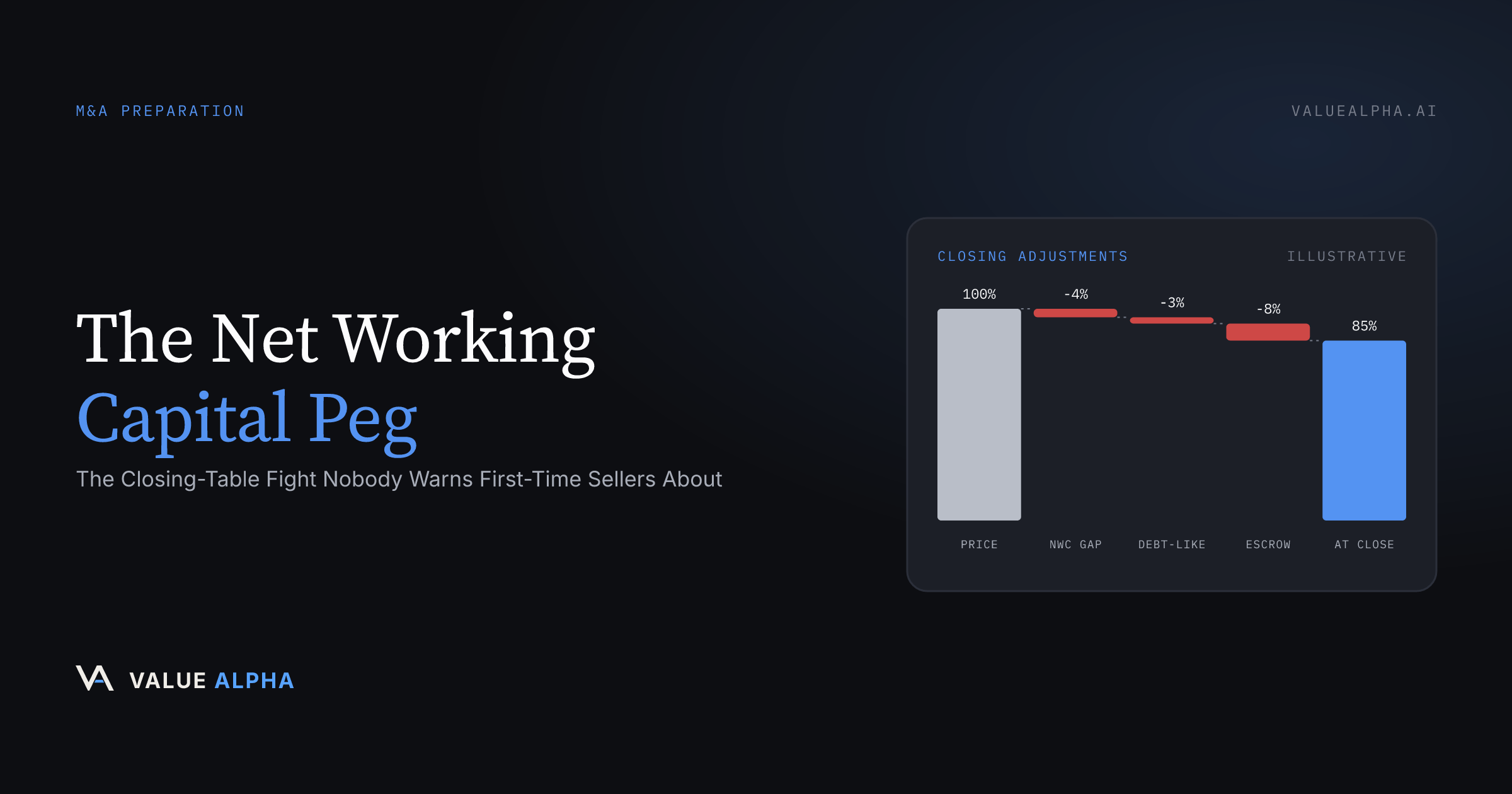
The Net Working Capital Peg: The Closing-Table Fight Nobody Warns First-Time Sellers About
The NWC peg explained: why 'cash-free, debt-free' deals still move six figures at closing, how the working capital target is set, and how buyers and sellers each protect themselves.
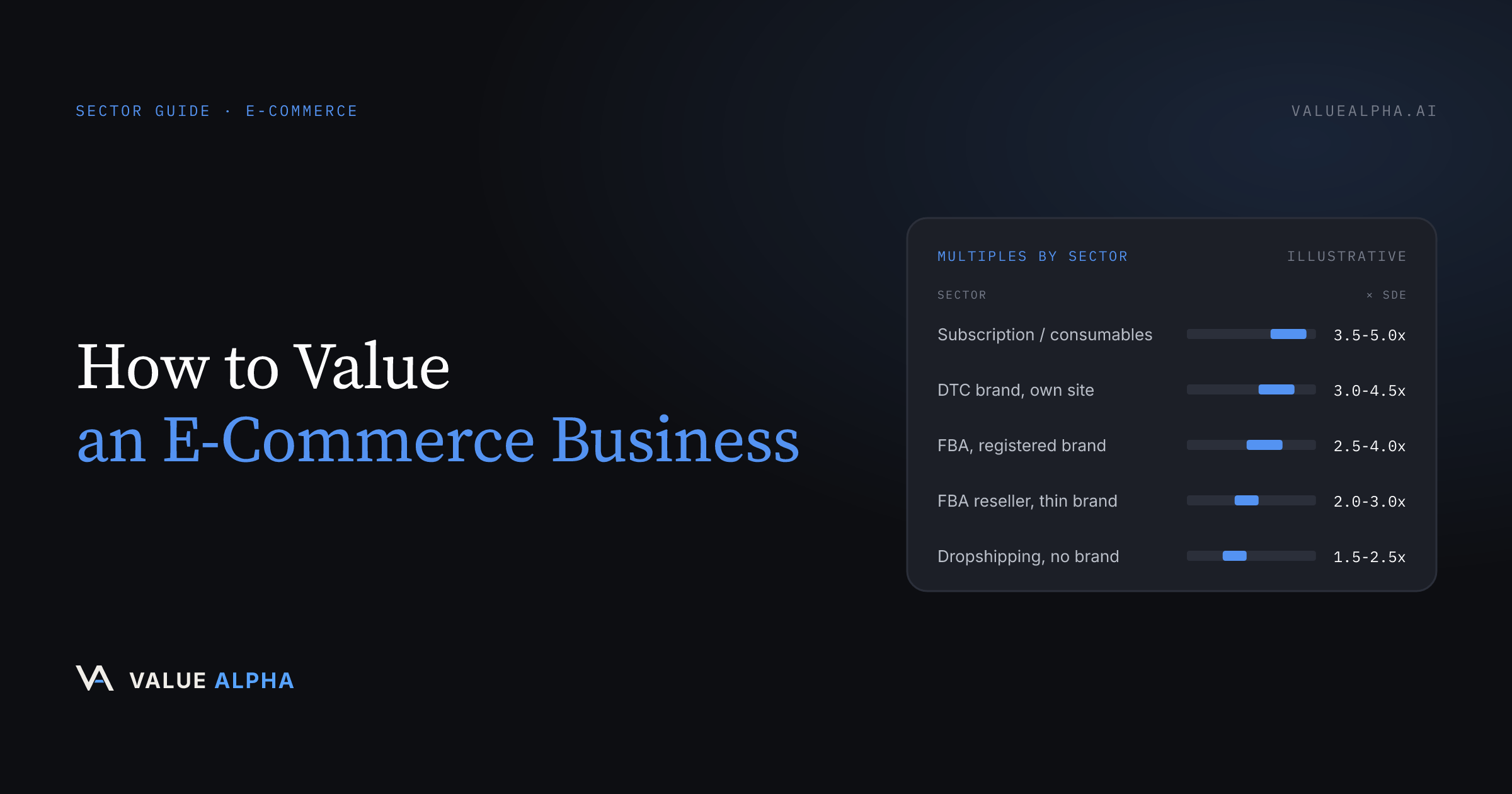
How to Value an E-Commerce Business: SDE Multiples, Revenue Quality, and Platform Risk
E-commerce valuation explained: the SDE and EBITDA multiples online businesses sell for by model (FBA, DTC, dropship), why revenue quality and platform dependence move the price, and a worked example.
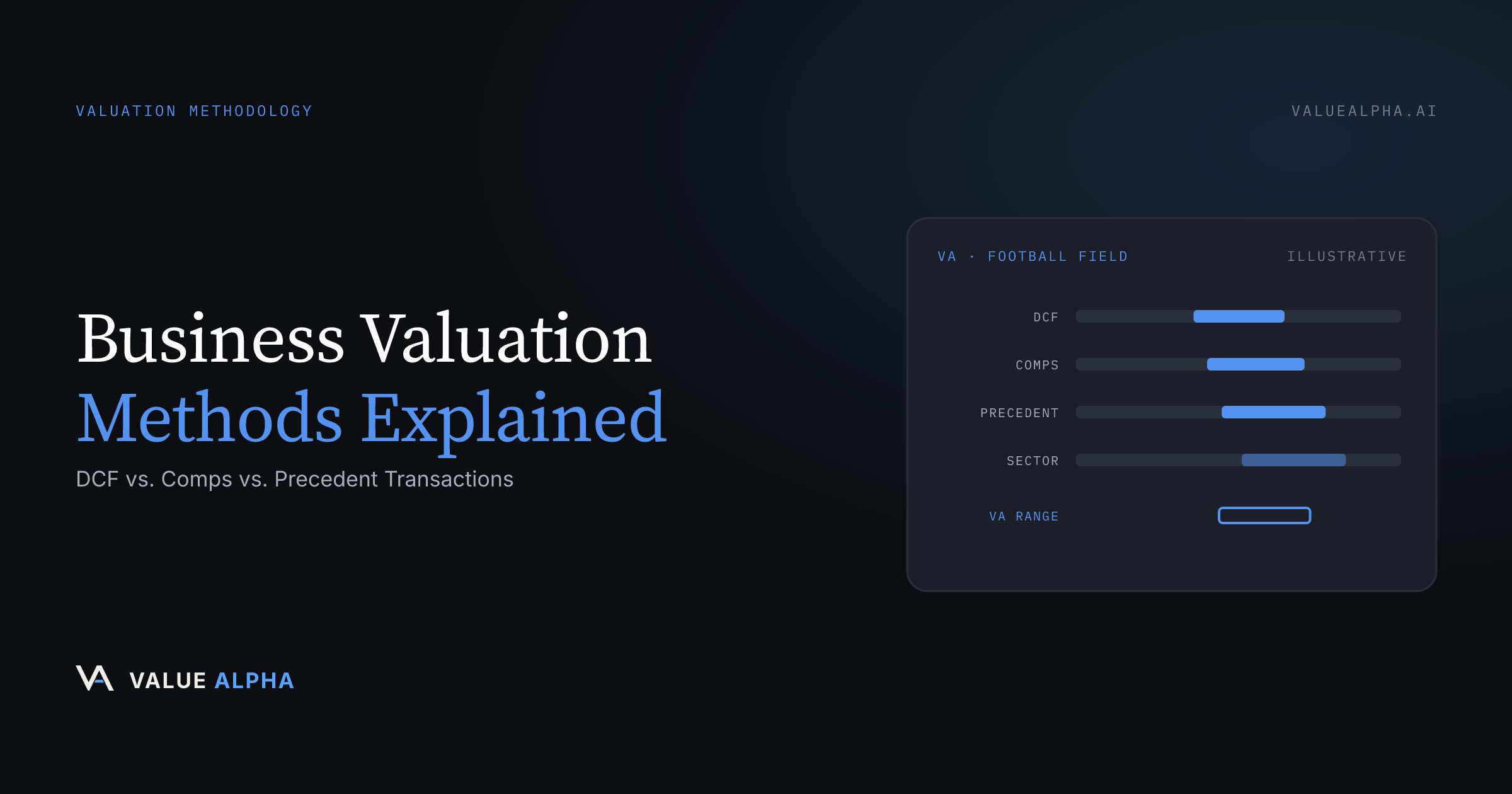
Business Valuation Methods Explained: DCF vs. Comps vs. Precedent Transactions
The five business valuation methods professionals actually use (DCF, comparable companies, precedent transactions, SDE/EBITDA multiples, and asset-based), when each wins, and how they combine into one defensible number.
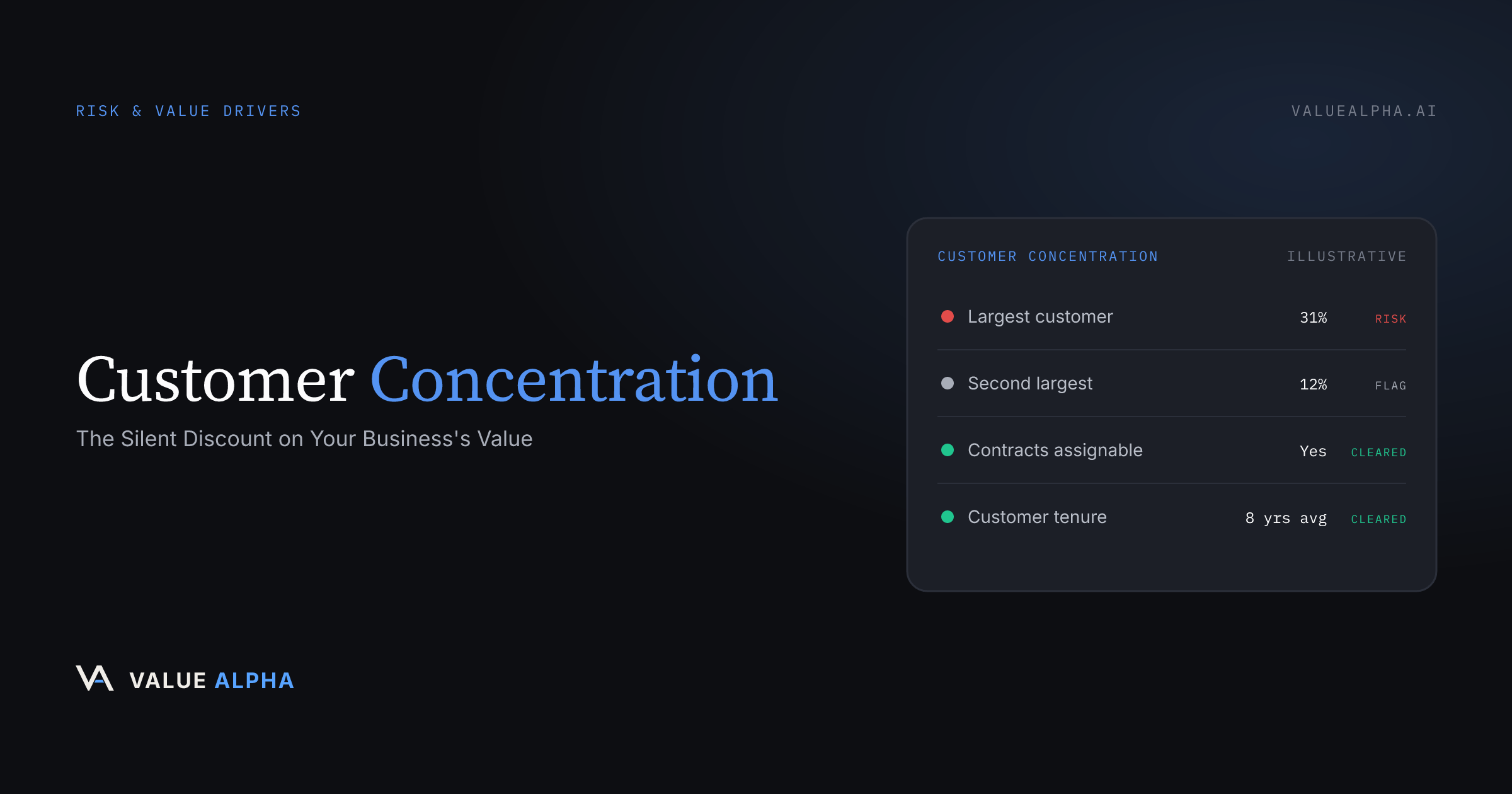
Customer Concentration: The Silent Discount on Your Business's Value
When one customer is 20% or more of revenue, buyers cut the price, restructure the deal, or walk. Here's how concentration is measured, what it costs in practice, and the 18-month fix.
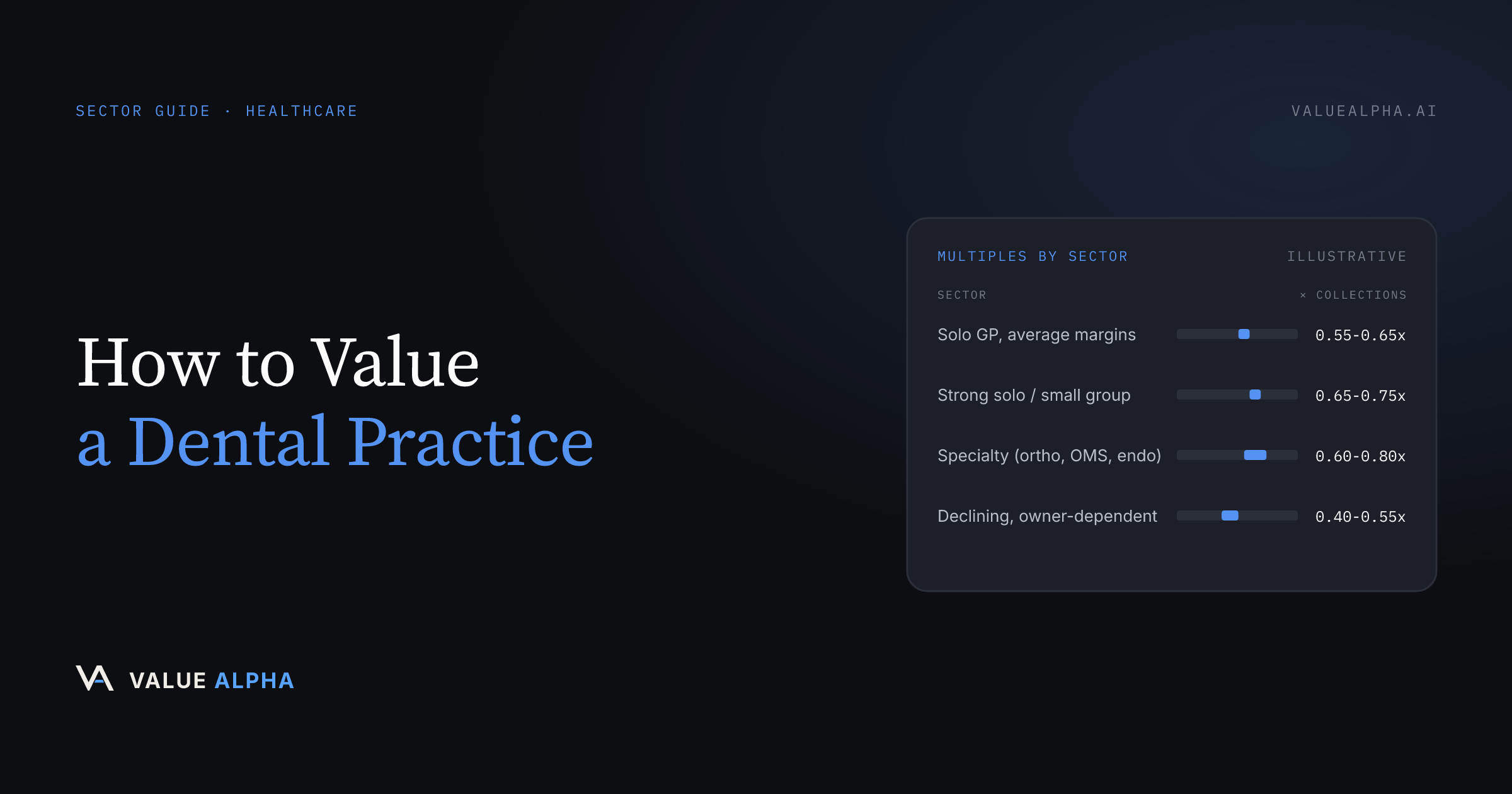
How to Value a Dental Practice: Collections, EBITDA, and What DSOs Actually Pay
Dental practice valuation explained: the percentage-of-collections rule, when EBITDA multiples take over, what drives DSO offers, and a worked example for a $900K practice.
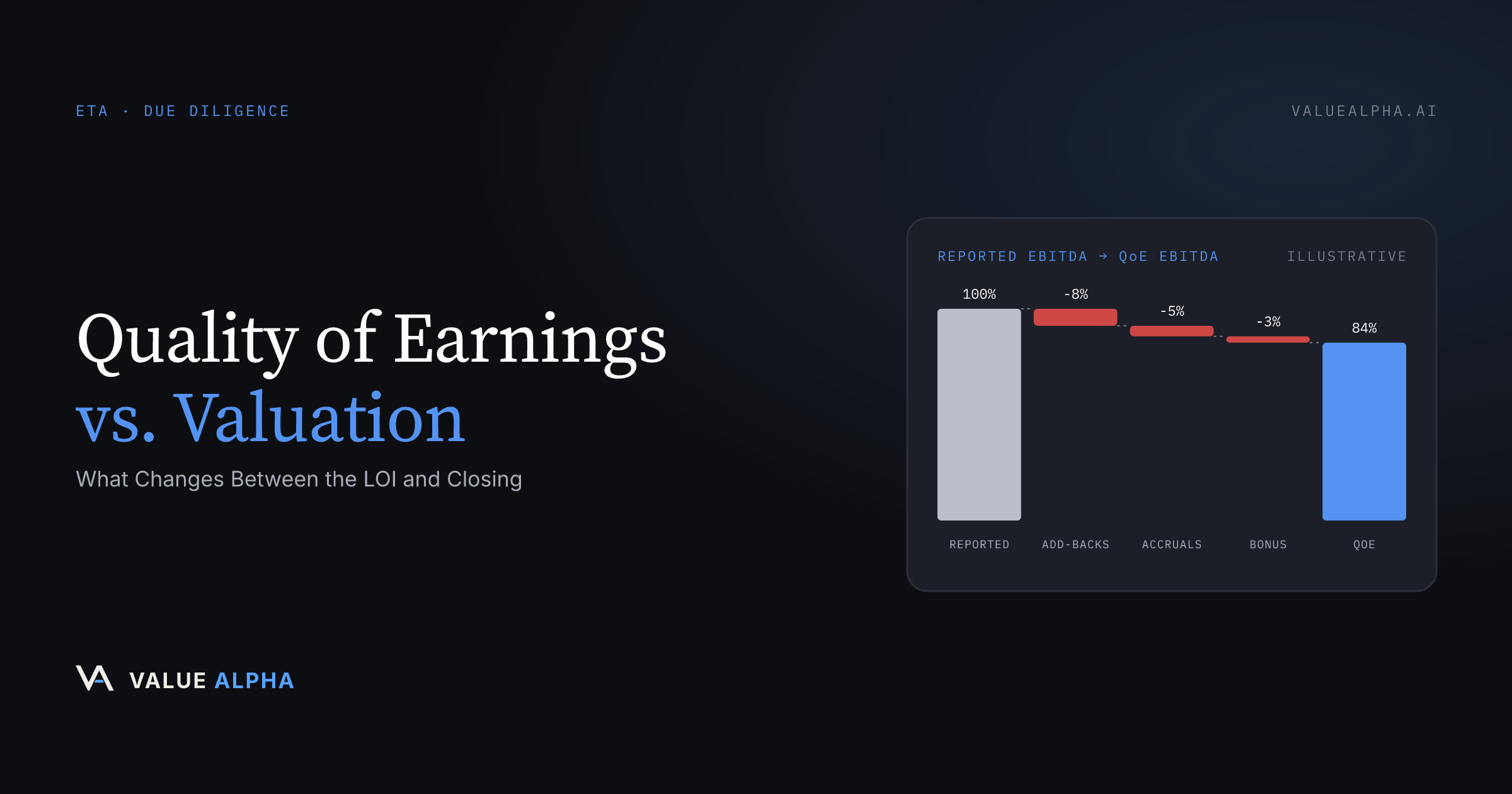
Quality of Earnings vs. Valuation: What Changes Between the LOI and Closing
A valuation sets the multiple; a Quality of Earnings (QoE) report tests the earnings underneath it. Here's what QoE actually examines, the adjustments that re-price deals, and how both sides prepare.
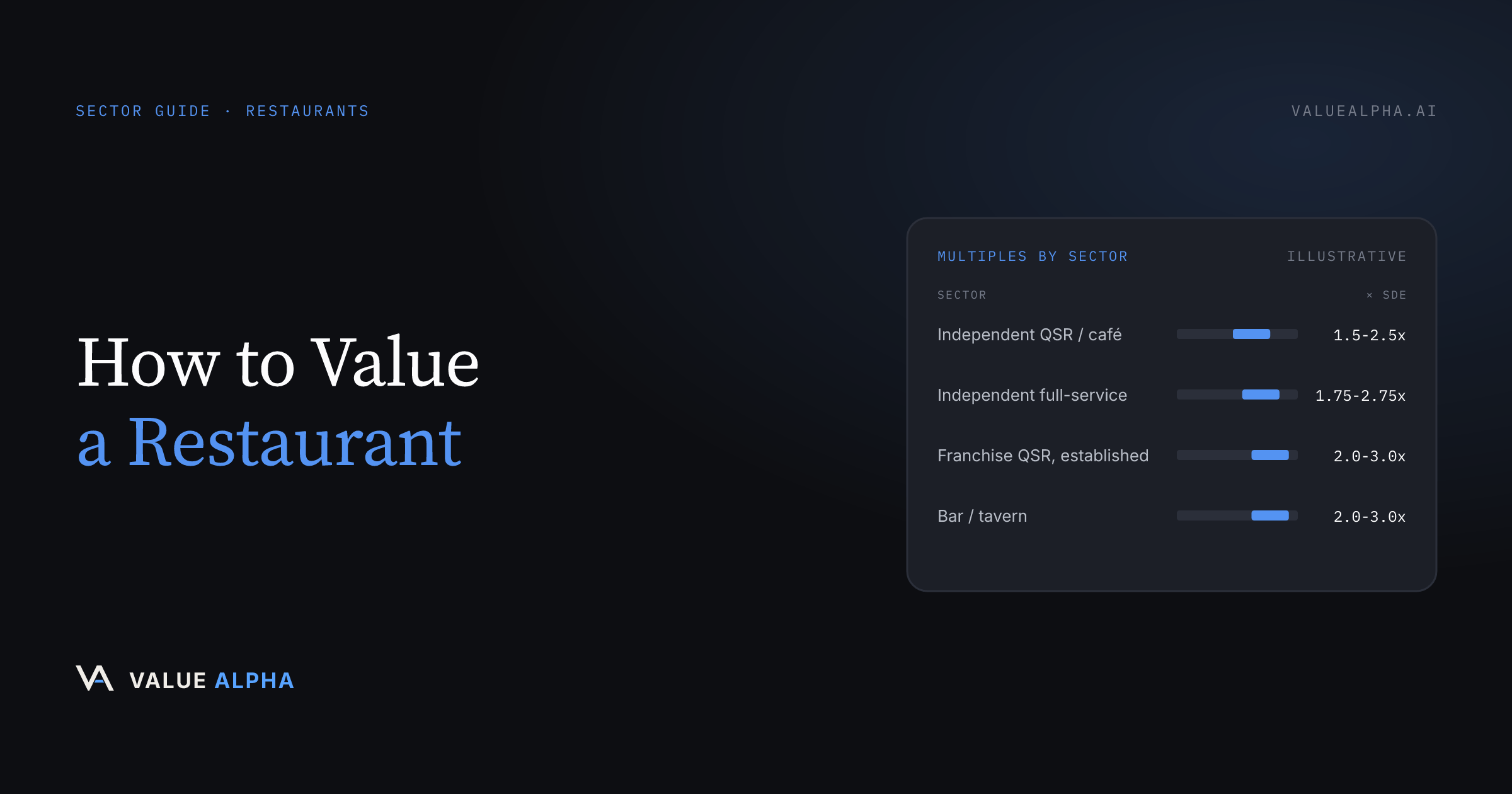
How to Value a Restaurant: SDE Multiples, Prime Cost, and What Buyers Actually Pay
How restaurant valuation works in 2026: the SDE multiples buyers pay by restaurant type, why prime cost and your lease move the number, and a worked example.
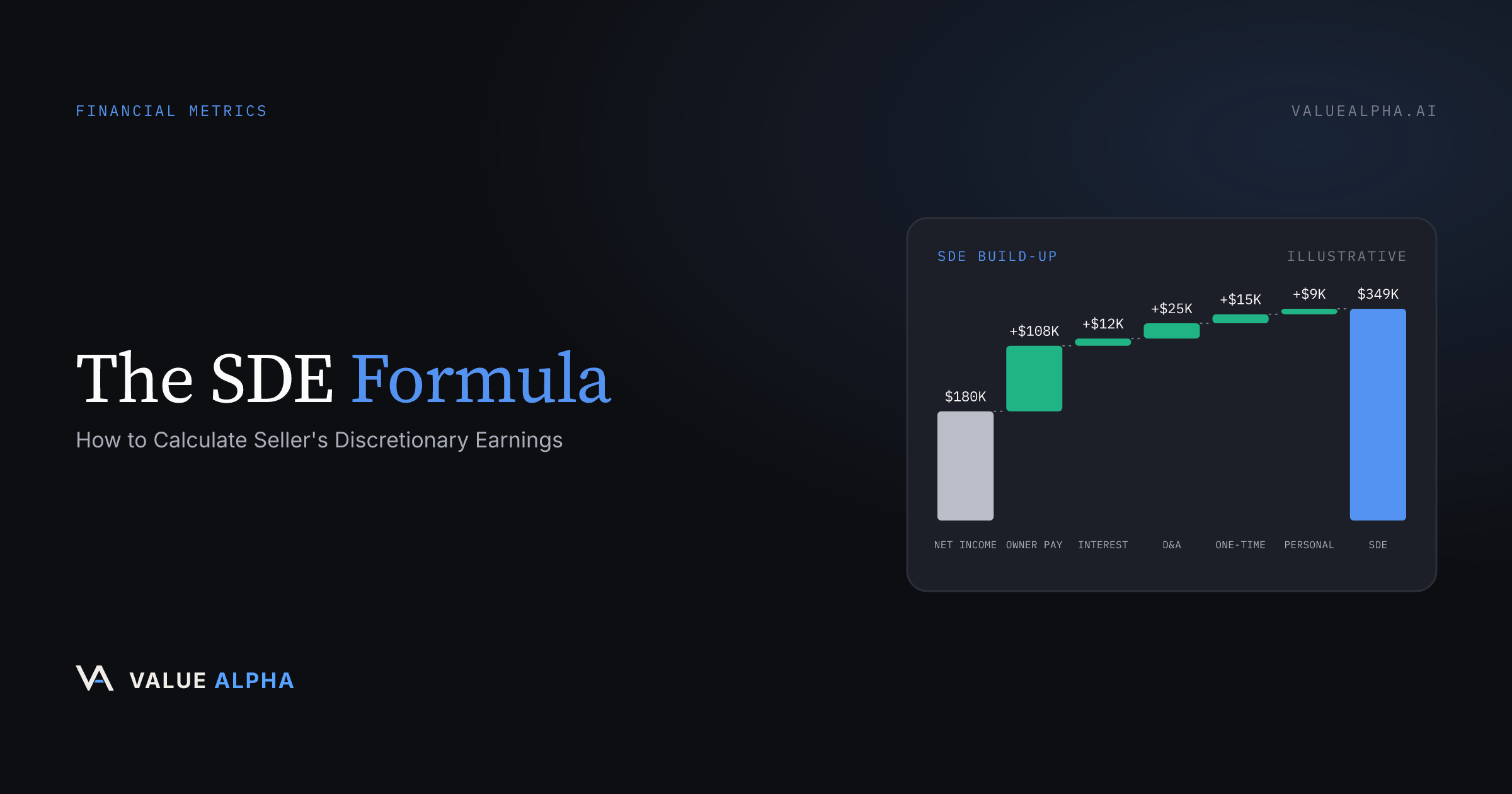
The SDE Formula: How to Calculate Seller's Discretionary Earnings (2026)
The SDE formula explained step by step: how to calculate Seller's Discretionary Earnings, exactly which add-backs to include, a worked example, and how SDE sets your business's value.
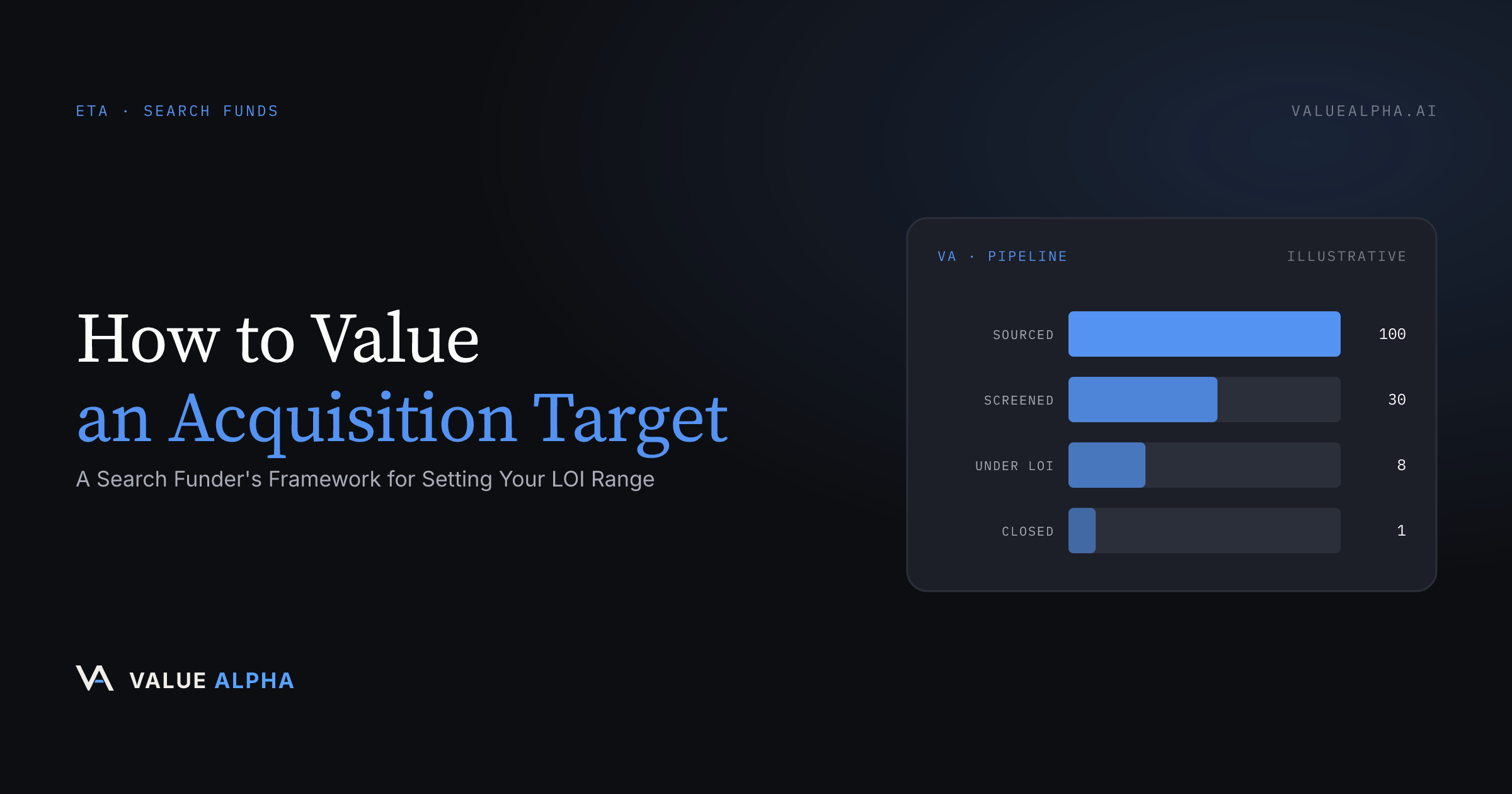
How to Value an Acquisition Target: A Search Funder's Framework for Setting Your LOI Range
A step-by-step framework for search funders and ETA buyers to value a small business and set a defensible LOI valuation range, with middle-market multiple benchmarks.
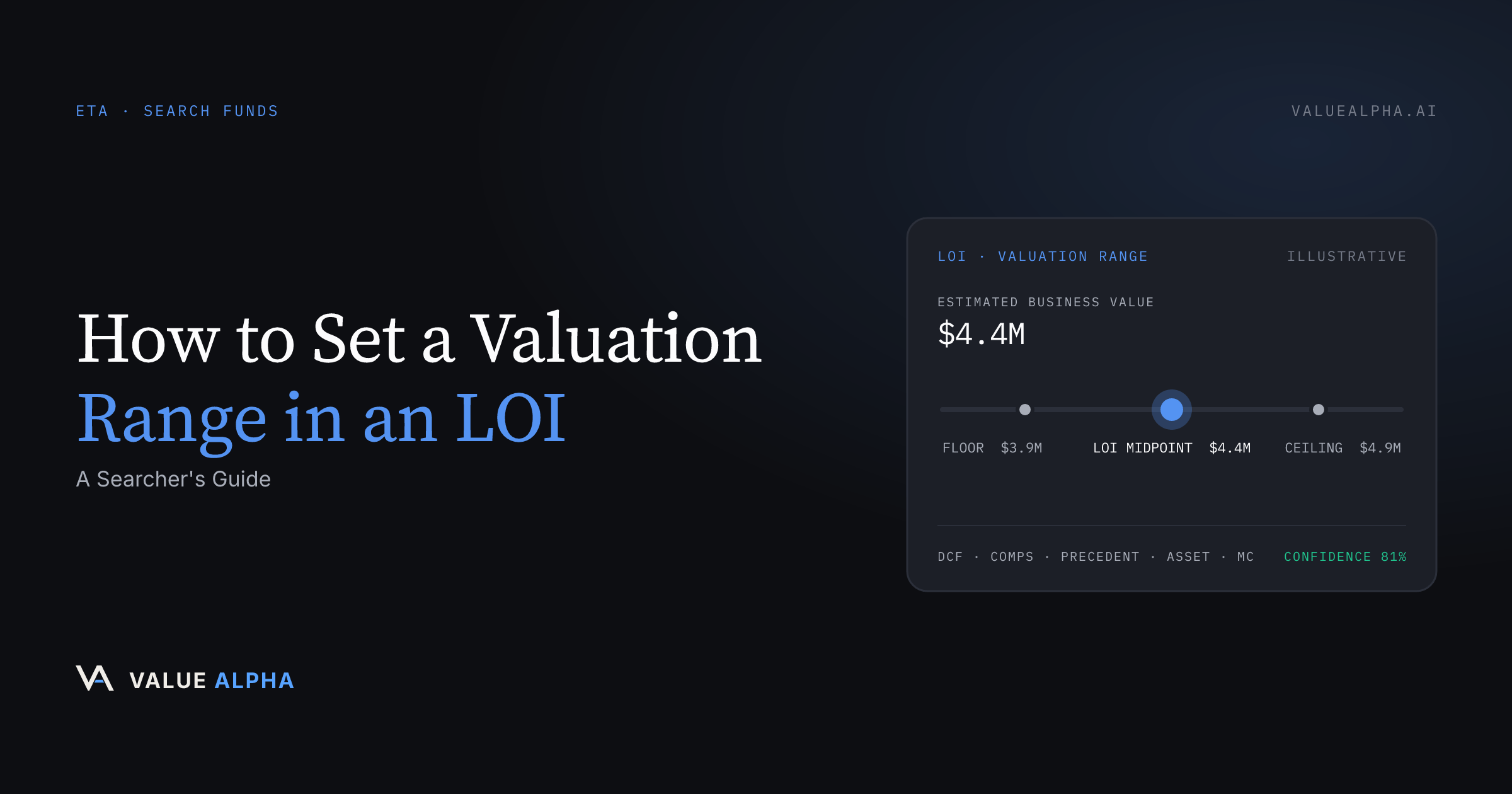
How to Set a Valuation Range in an LOI: A Searcher's Guide
How searchers and self-funded buyers set a defensible LOI valuation range before diligence: the multiple bands, the four discounts to price in, and how wide to leave the range.
SBA 7(a) Business Valuation Requirements (2026): A Buyer's Guide
SBA 7(a) acquisitions need an independent business valuation once the financed amount tops $250,000. See the 2026 SOP 50 10 8 rules, who qualifies, and what to prepare.
How to Value an HVAC Business in 2026: SDE and EBITDA Multiples
HVAC businesses sell for about 2x to 3.3x SDE for small shops and 5x to 9x EBITDA for larger firms. See 2026 multiples by size and what drives the number.
The Brief · Dispatch Nº1: Why Main Street Doesn't Trade Like SaaS
Profitable home-services businesses trade near 11× EBITDA while SaaS sits at 24× - the multiple you anchor to drives most of the valuation gap. Plus what we shipped.
Add-Backs Explained: How to Normalize EBITDA Before You Sell
Add-backs adjust your reported earnings to reflect true business profitability. Learn which add-backs buyers accept, which they reject, and how normalization affects your valuation.
The Valuation Gap: Why Owners and Buyers Price the Same Business Differently
The valuation gap is the difference between what you think your business is worth and what a buyer will pay. Here's why it happens - and how to close it before you go to market.

WACC Explained: Why Your Discount Rate Can Make or Break a Valuation
WACC is one of the most misunderstood terms in business valuation. Here's what it is, why it matters, and how it directly affects what your business is worth.
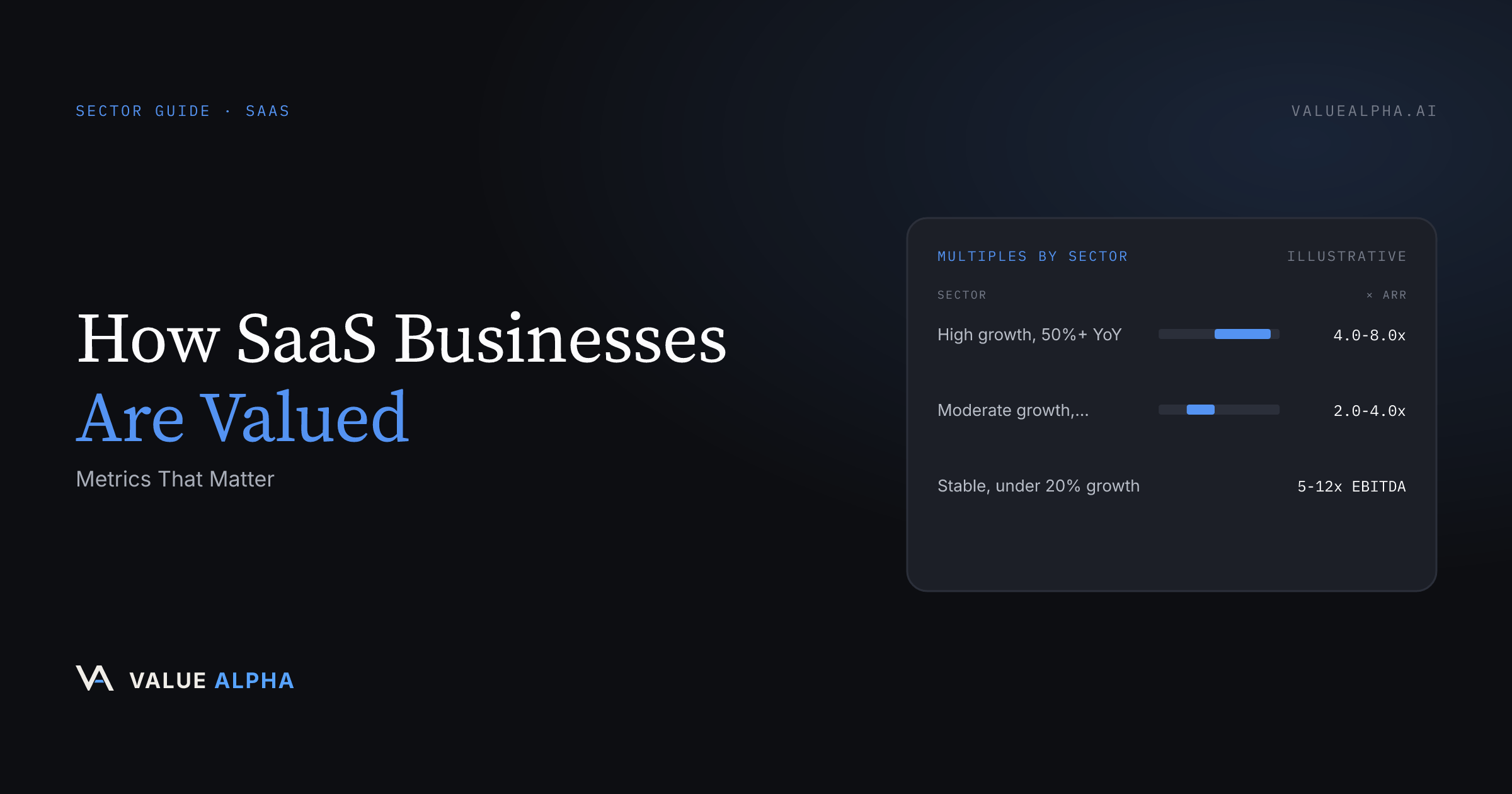
How SaaS Businesses Are Valued: Metrics That Matter
SaaS companies are valued differently than traditional businesses. Learn which metrics drive SaaS valuations, what multiples to expect, and how to prepare your business for a sale.
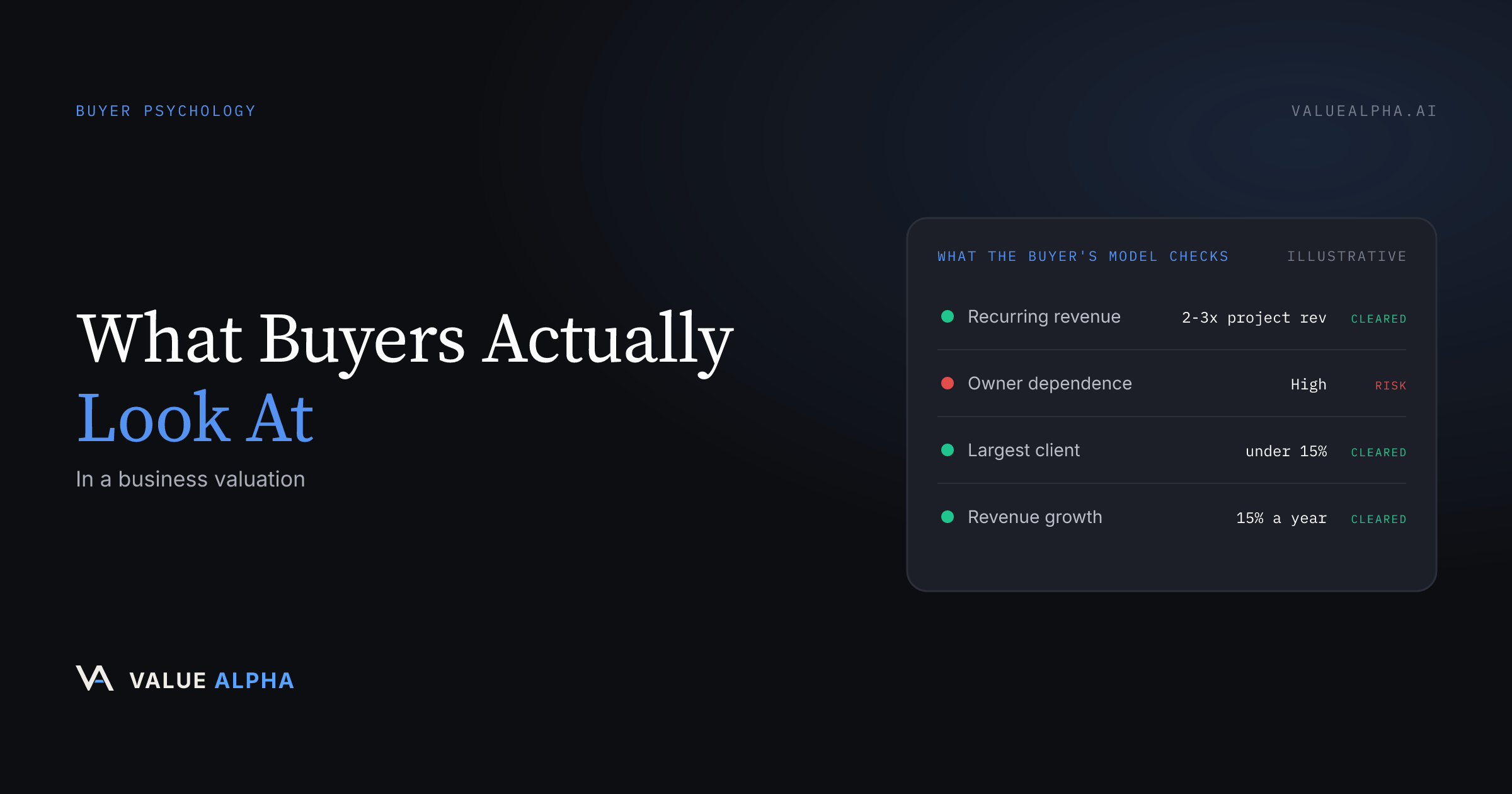
What Buyers Actually Look At in a Business Valuation
Forget vanity metrics. Here are the 5 factors that move the needle when a buyer evaluates your business - and how to strengthen each one.
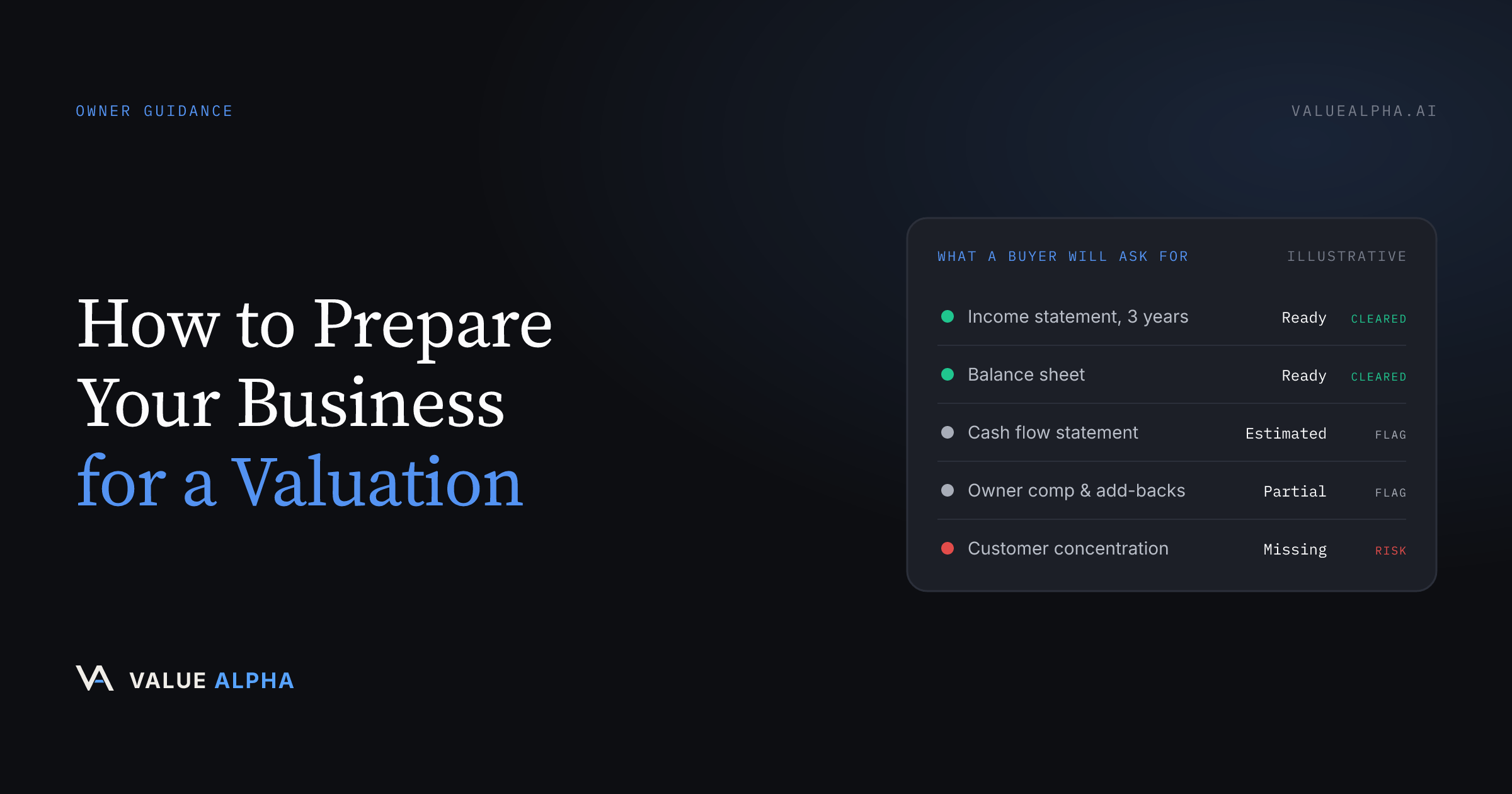
How to Prepare Your Business for a Valuation
The 7 documents and data points you need before running a business valuation - and how each one impacts your final number.
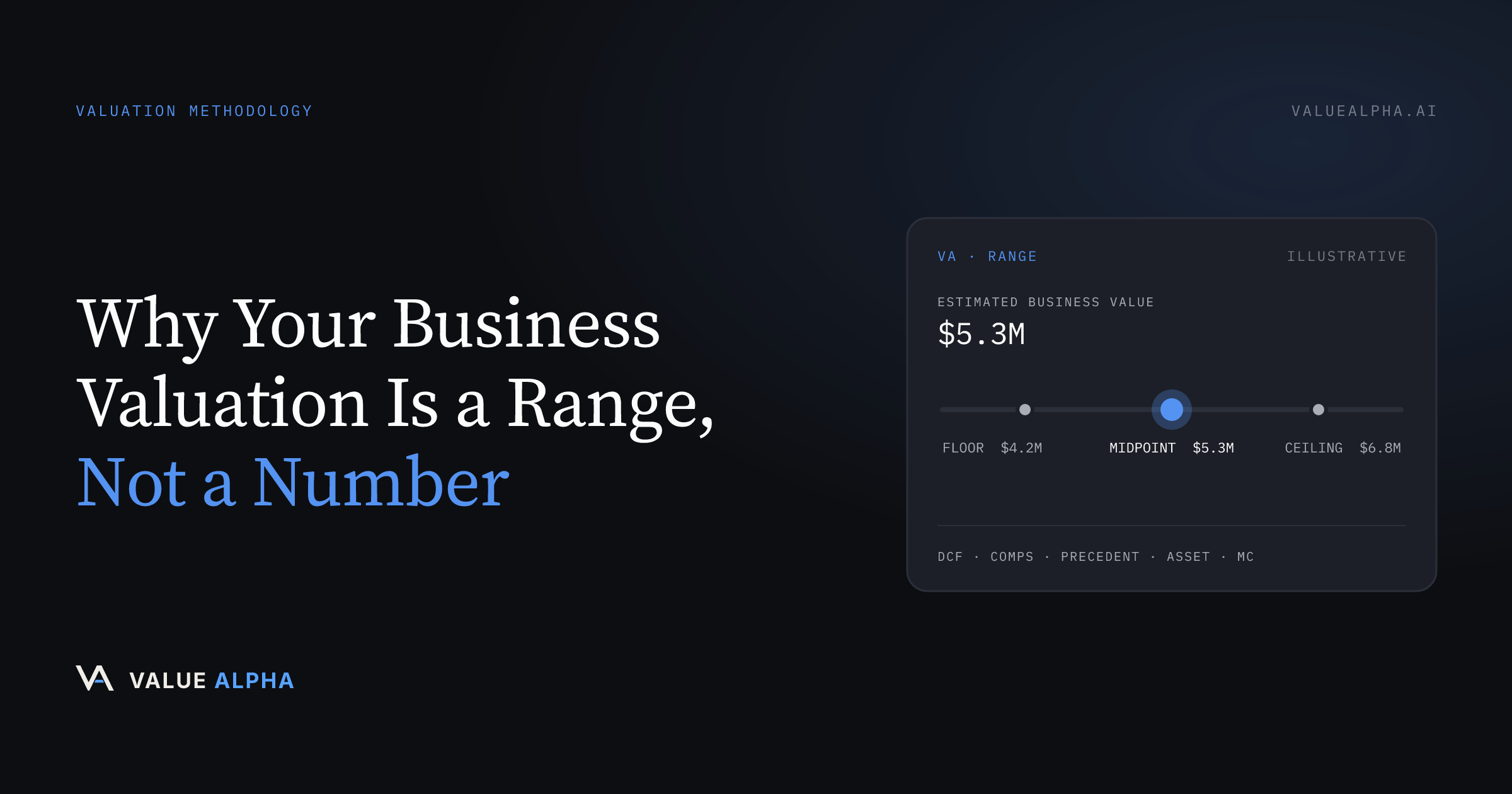
Why Your Business Valuation Is a Range, Not a Number
A single valuation number is a red flag. Here's why serious buyers, investors, and advisors always think in ranges - and how to interpret yours.
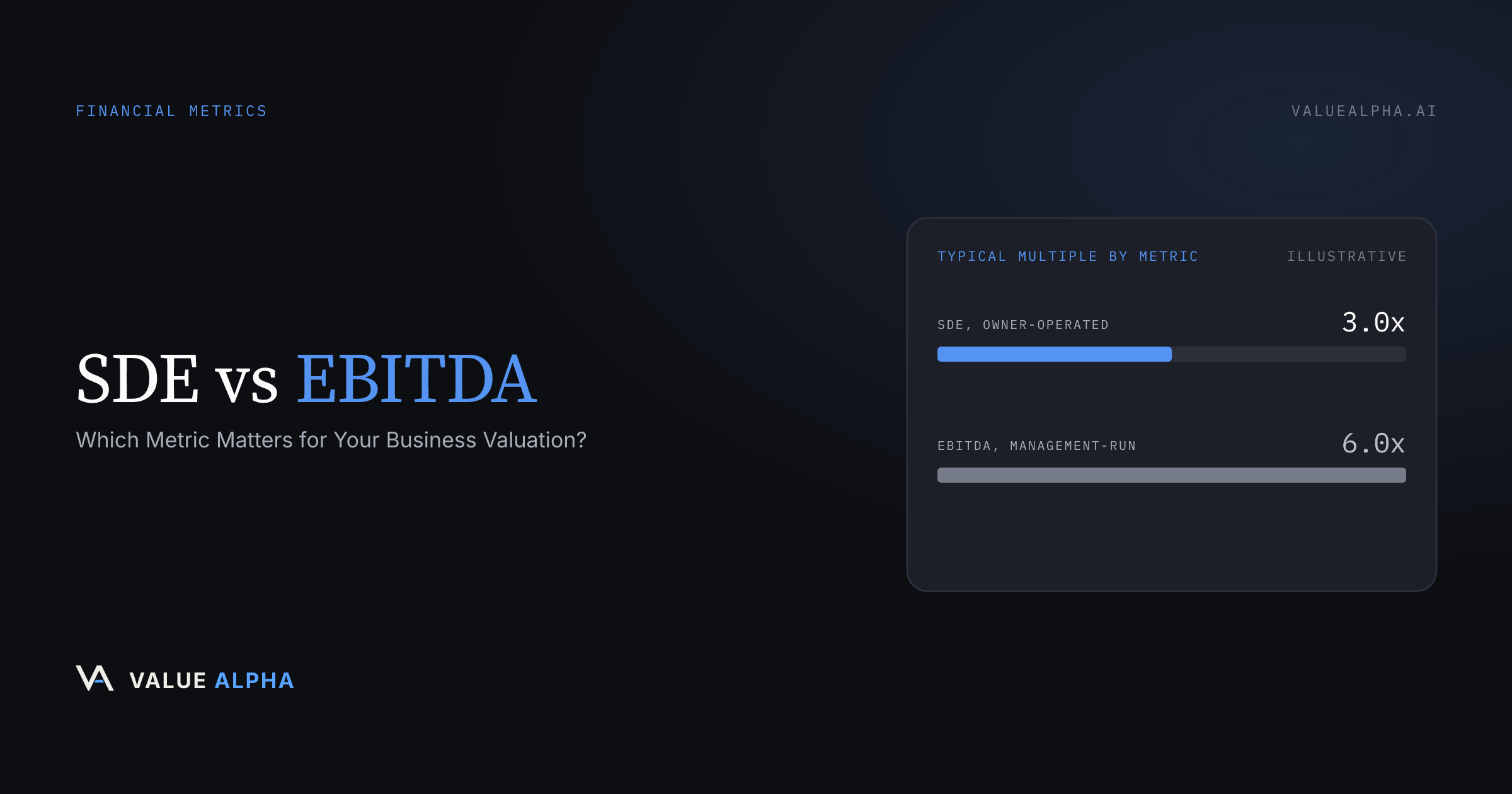
SDE vs EBITDA: Which Metric Matters for Your Business Valuation?
Understanding the difference between Seller's Discretionary Earnings and EBITDA - and why choosing the wrong one can cost you millions in a sale.
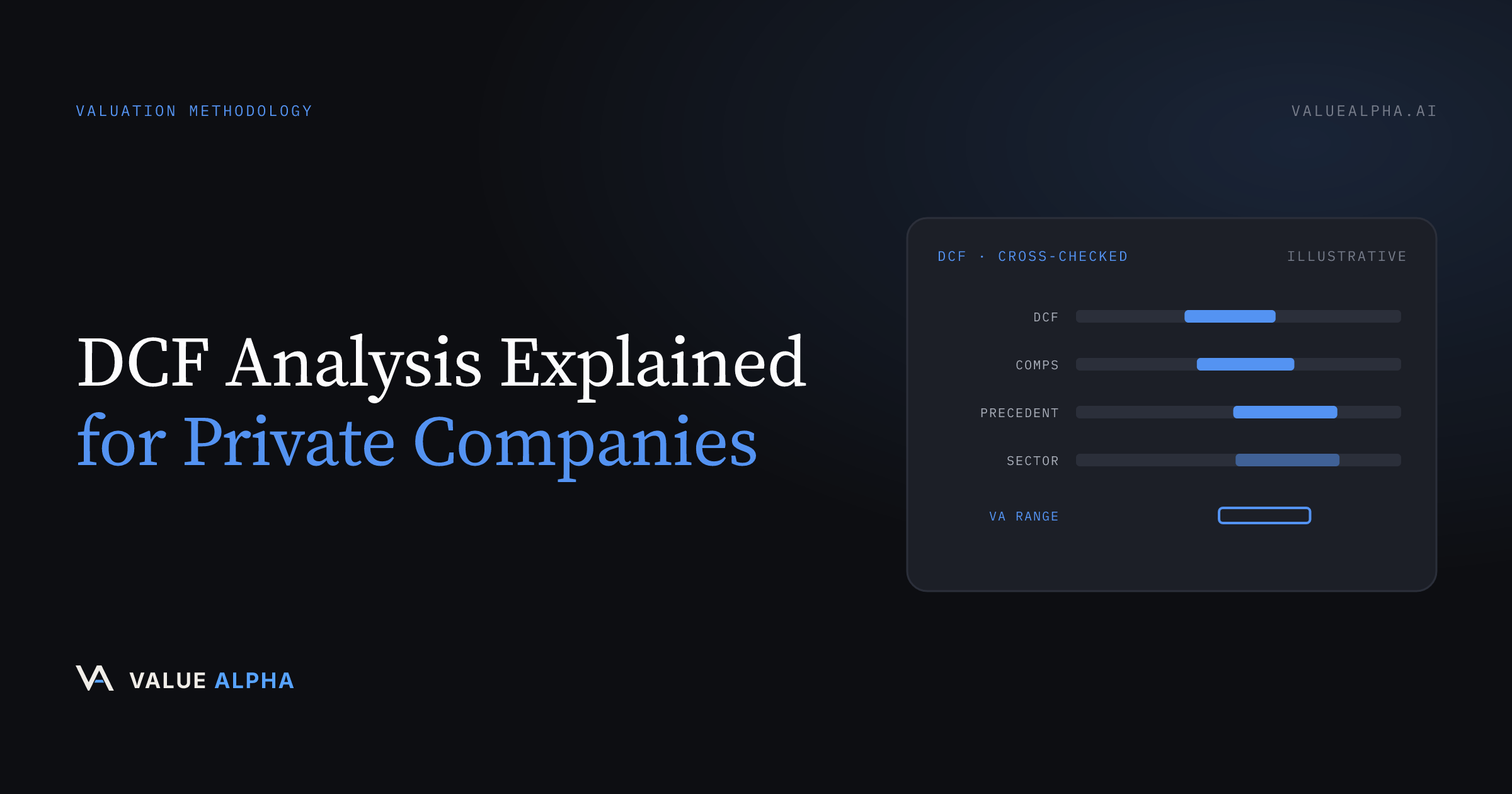
DCF Analysis Explained for Private Companies
A clear, practical guide to discounted cash flow analysis for private companies. Learn the five key steps, how to estimate WACC without public market data, terminal value approaches, and common pitfalls to avoid.
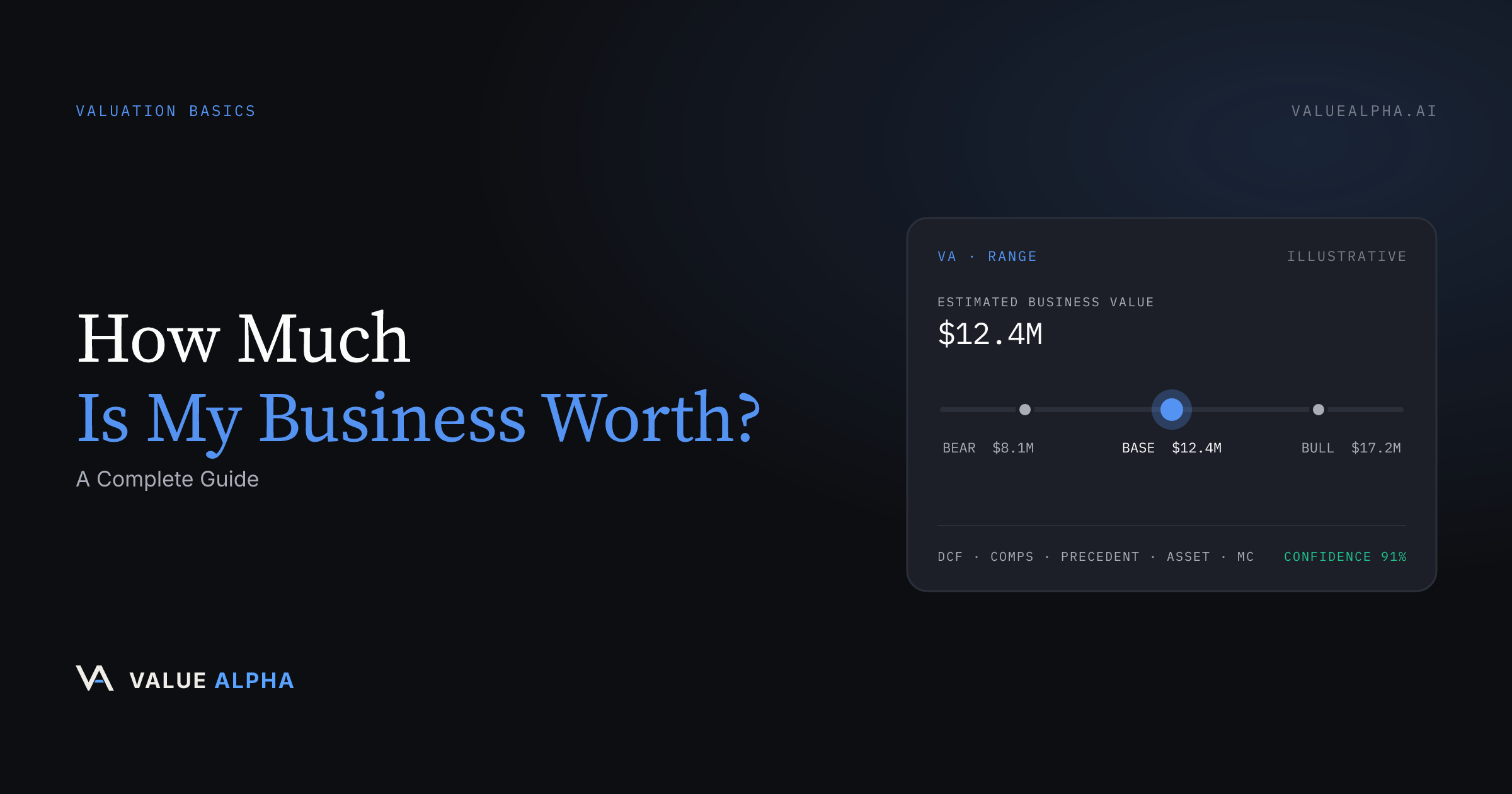
How Much Is My Business Worth? A Complete Guide
Learn exactly how to determine your business valuation using the three main approaches: income, market, and asset-based methods. Avoid common mistakes and understand why valuation ranges matter more than a single number.
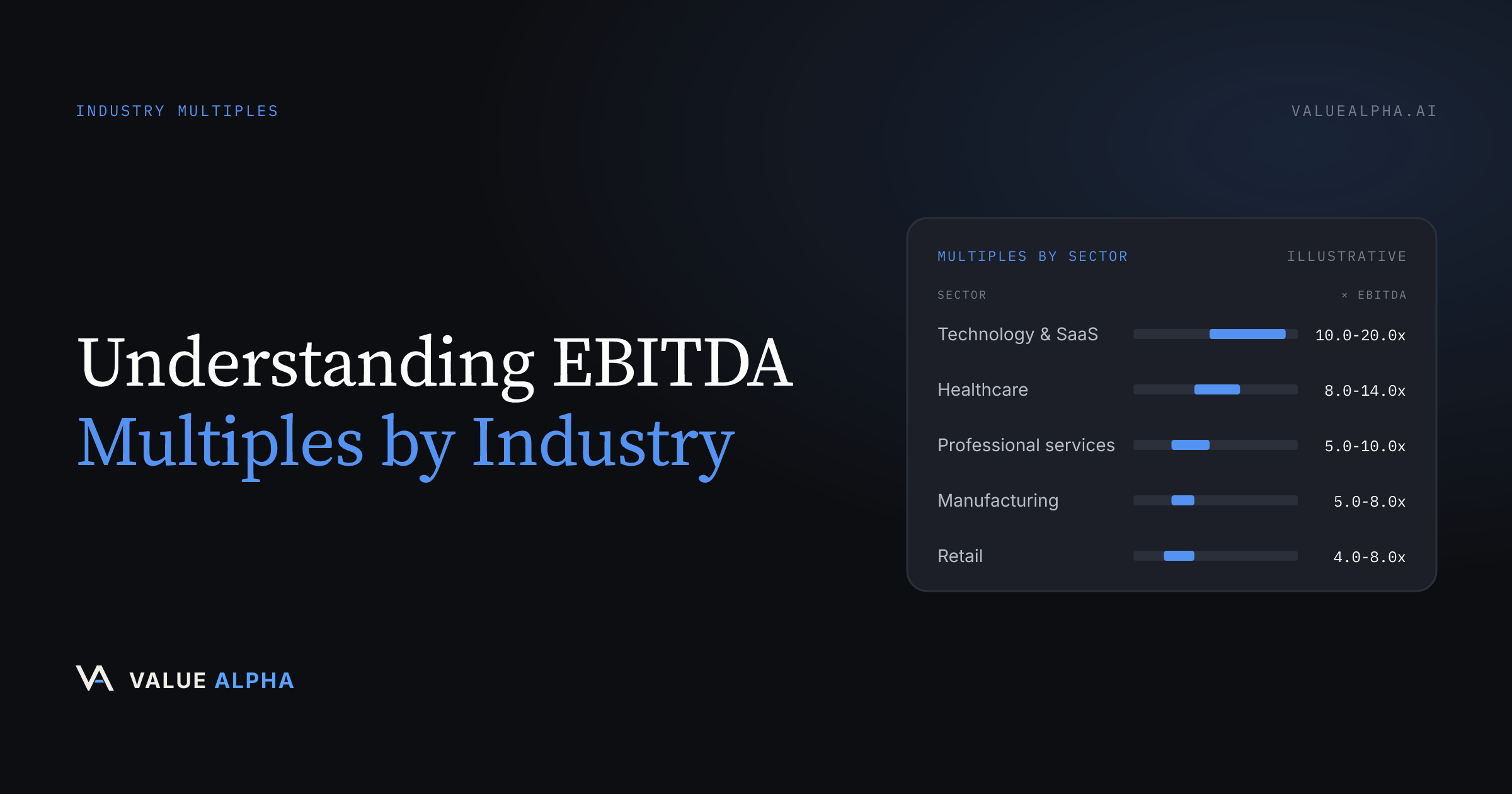
Understanding EBITDA Multiples by Industry
Learn what EBITDA multiples are, how they are used in business valuations, and what typical ranges look like across major industries including technology, healthcare, manufacturing, retail, and professional services.